



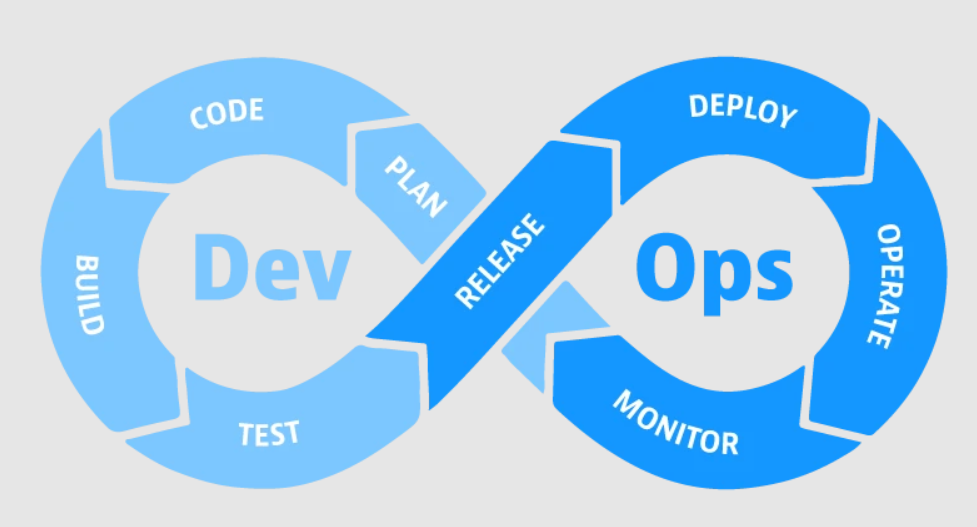



DevOps is often described as a “practice,” but in reality it’s a delivery system. It breaks down the barriers between development, QA, security, and operations by making work visible, repeatable, and automated. Teams stop relying on heroic manual steps and instead build a pipeline that turns code into production safely.
At Global Technology, we help you implement DevOps in a practical way: the right tooling, the right process, and the right guardrails—so releases are fast, stable, and auditable.
The reason DevOps became essential is simple: businesses cannot afford slow cycles and fragile deployments. When release risk is high, teams deploy less often, features ship late, and innovation slows down. DevOps reverses that pattern.
DevOps isn’t “install Kubernetes and call it done.” Tools matter, but the objective is consistent delivery and trusted outcomes. The best DevOps toolset is the one that matches your product, your team, and your operating model.
We start from goals and constraints, then design the pipeline around them: deployment frequency, compliance requirements, cloud strategy, release approvals, and the maturity level of your teams.
When selecting DevOps tools, we avoid “one-size-fits-all.” Instead, we evaluate what will work in your environment and scale over time.
Application and infrastructure fit
Are you running on-premise, cloud, or hybrid? Are you containerized? Do you run Windows workloads, Linux workloads, or both?
Tooling must support your reality—not an ideal future state.
Integration with developer workflows
The best pipeline is the one engineers actually use. We ensure compatibility with your repos, branching strategy, IDEs, and project tools
(GitHub, GitLab, Azure DevOps, Bitbucket, Jira, etc.).
Open integration ecosystem
Modern delivery chains require integrations: CI/CD, issue tracking, chat ops, artifacts, testing frameworks, secrets, and monitoring.
Tools should connect cleanly without fragile glue code.
Scalability and usability
Tooling must be easy to adopt and easy to extend. If only one engineer can operate the system, it becomes a bottleneck.
Cost and licensing model
We consider licensing costs, operational cost, and long-term support. A “free” tool can be expensive if it increases maintenance burden.
A paid tool can be cheaper if it reduces time-to-deliver and incidents.
DevOps can mean different things in different organizations. Our focus is to build a production-grade delivery foundation that supports growth. Typical scope includes:
Continuous Integration and Continuous Delivery/Deployment (CI/CD) are the core mechanisms that move changes from code to production. A strong CI/CD pipeline eliminates manual steps and makes delivery measurable.
We build pipelines that include:
The result is not just speed—it’s confidence. Teams ship faster because they trust the pipeline.
“It works on my machine” is a delivery problem. Containers solve it by packaging application code with its runtime dependencies into an isolated, consistent unit. Docker is often the foundation of this approach.
We help teams adopt containerization pragmatically:
Kubernetes is a leading orchestration platform for containerized workloads. It automates scheduling, scaling, and recovery. It’s a strong option when you need resilience, horizontal scaling, and standardized operations across multiple services.
However, Kubernetes also introduces complexity. If your product is early-stage or your team is small, a managed platform (or simpler container approach) might deliver better ROI. We help you decide objectively.
Where Kubernetes is a great fit
What we implement around Kubernetes
A fast pipeline is useless if it ships bugs quickly. DevOps works best when quality is automated and observable. We integrate QA automation so teams get fast feedback with meaningful reporting.
We commonly implement:
Security cannot be a separate team that says “no” at the end. DevSecOps embeds security checks directly into the delivery flow: early detection, automated enforcement, and auditable controls.
When incidents occur, the question is not “who caused it?” The question is “how fast can we detect, understand, and recover?” Observability (logs, metrics, traces) makes systems operable and teams calm.
We help implement:
Tool choice depends on your ecosystem. Below are common “families” of tools we support and integrate. The goal is a coherent chain, not a messy collection.
Source Control: GitHub, GitLab, Azure Repos, Bitbucket
CI/CD: GitHub Actions, GitLab CI, Azure Pipelines, Jenkins, CircleCI
Containers: Docker, container registries, image scanning
Orchestration: Kubernetes (managed or self-hosted), Helm, GitOps tools
Infrastructure as Code: Terraform, Bicep/ARM, CloudFormation
Observability: application monitoring, log aggregation, dashboards, alerts
Collaboration: Jira, Confluence, Teams, Slack
We can join at any stage—new product, active delivery, or post-incident stabilization. The approach is practical and measurable:
1) Assessment
Review current delivery flow, environments, pain points, incident patterns, and release frequency. Identify bottlenecks and risks.
2) Roadmap
Define a prioritized DevOps plan: “quick wins” first (stability and visibility), then automation, then scale.
3) Implementation
Build pipelines, codify infrastructure, containerize workloads, implement monitoring and security controls.
4) Enablement
Document workflows, train teams, provide runbooks, and ensure the system can be operated without vendor dependency.
Whether you need a complete pipeline from scratch or want to improve an existing setup, our DevOps team can help you deliver software faster, safer, and with clear operational visibility.