



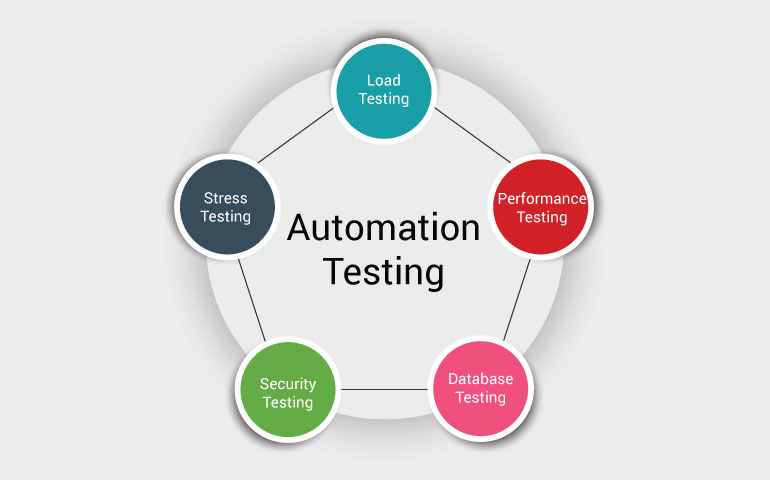



Quality Assurance Automation (also called Test Automation) is the discipline of validating software behavior using repeatable, tool-driven tests. Even with strong engineering practices, real systems always contain defects—especially when code changes frequently, requirements evolve, or multiple teams deliver features in parallel. Manual testing alone cannot keep up with that pace.
QA automation helps teams reduce repetitive checks and focus human attention where it matters most: exploratory testing, edge cases, usability validation, risk assessment, and business-critical scenarios. When implemented correctly, automated testing becomes a permanent safety net that evolves alongside your product.
Whether you are building a customer web platform, an internal enterprise app, a mobile product, or a complex API ecosystem, we help you establish a QA automation strategy that fits your reality—team structure, timelines, technology stack, and release frequency.
QA automation is the process of designing and running tests using scripts and tools rather than repeating the same validation manually. The goal is not to “automate everything.” The goal is to automate the right things—tests that are stable, repeatable, and valuable.
Automated tests can validate everything from simple UI interactions to complex backend workflows, including authentication, data integrity, business rules, integrations, and performance constraints. After tests are created, they can run consistently and frequently: on every pull request, nightly builds, or before each release.
Automation is most effective when it is treated as engineering—not as a one-time activity. Our delivery approach combines test design, tooling, and CI/CD integration to produce sustainable results.
No—and it shouldn’t. Automation is excellent at repeating known checks, but humans are needed for: exploratory testing, validation of UX decisions, ambiguity resolution, scenario creativity, and risk-based thinking.
The best teams combine both: automation provides speed and consistency; human testers provide intuition and product insight. That is why we position QA automation as a multiplier for QA talent, not as a replacement.
When implemented with a clear strategy, QA automation produces measurable improvements across delivery, cost, and reliability.
1) Reduced Testing Time and Faster Releases
Modern products ship frequently. With manual-only validation, release cycles become slow and stressful.
Automated suites run quickly and repeatably, allowing teams to validate critical flows in minutes rather than days.
This accelerates feedback and reduces the chance that defects survive until late stages.
2) Higher Test Coverage and More Reliable Outcomes
Automation enables broad coverage across browsers, devices, configurations, and data sets.
Instead of testing a small portion of the product due to time constraints, teams can run many scenarios consistently,
catching regressions that are hard to detect manually.
3) Better Use of QA Talent
Automation removes monotonous repetition. Your QA team can focus on high-value activities:
edge-case thinking, exploratory sessions, acceptance criteria review, and collaboration with product and engineering.
The result is higher quality—not just more tests.
4) A Natural Fit for DevOps and CI/CD
DevOps relies on continuous validation. QA automation enables “continuous testing,” where quality checks are triggered automatically
during build and deployment pipelines. Teams can enforce quality gates before promoting releases to staging or production.
5) Reduced Cost of Defects
The later a bug is found, the more expensive it becomes. Automated tests find regressions earlier, reducing hotfixes, incident response,
customer support load, and reputational damage. Even a small reduction in production issues can justify automation investment.
We design automation around business value and risk. Common automation targets include:
Automation brings huge benefits, but teams sometimes struggle due to unrealistic expectations or weak foundations. We help you avoid the typical traps.
1) Human Dependency and Skill Requirements
Automated tests do not write themselves. They require engineering skills, clean test design, and good product understanding.
Teams still need experienced QA professionals to decide what to test, how to test it, and how to interpret results.
2) Initial Setup Cost
Building an automation framework involves investment: tooling, environment configuration, test data strategy, reporting,
and CI integration. The payoff comes from repeatable value over time. We design frameworks that are lightweight and maintainable,
so you get ROI sooner and avoid over-engineering.
3) Selecting the Right Tools
There is no single “best” tool—only the right tool for your stack and goals.
Choosing incorrectly can lead to high maintenance and flaky tests. We match tools to your product type:
web, mobile, desktop, APIs, microservices, and the CI/CD systems you already use.
4) Flaky Tests and Poor Test Data
Flaky tests destroy trust. They often happen due to unstable UI selectors, timing issues, or unreliable environments.
We mitigate this by using stable locators, smart waiting strategies, controlled test environments,
and a clear test data management approach.
5) Weak Collaboration Between Teams
Quality is a shared responsibility. If developers, QA, and product teams are not aligned, automation becomes a silo.
We establish collaboration routines: shared acceptance criteria, defect triage, and clear ownership for test maintenance.
We can join your organization in different ways depending on what you need: a full automation build-out, improvements to an existing suite, or a quality strategy upgrade.
Not every product needs the same automation maturity. QA automation becomes especially valuable when:
If you want to improve release confidence and speed, we can help you design a QA automation roadmap and implement a framework that lasts. Tell us your product type, release frequency, and current testing approach, and we’ll propose a practical plan.