Dedicated Development Team
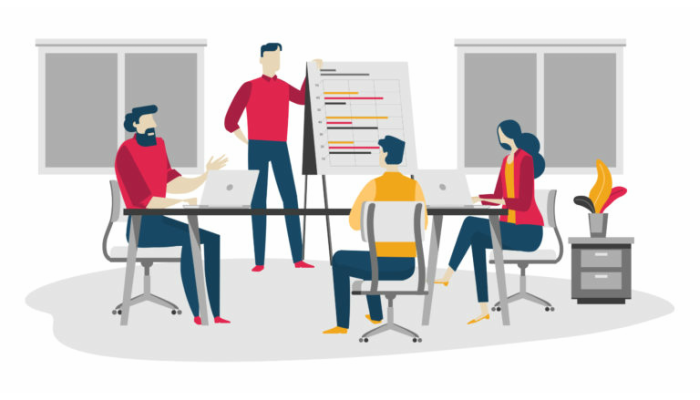
A Dedicated Development Team is a long-term engagement model where you work with a stable, full-time team provided by a technology partner—engineers, QA, DevOps, UI/UX, and product support—aligned to your product goals and delivery standards.
Unlike ad-hoc outsourcing or short-term staffing, a dedicated team becomes an extension of your organization. They learn your domain, your users, your codebase, and your roadmap, so velocity and quality improve over time instead of resetting with each new contractor.
This model is ideal when your business needs continuous delivery: building a product, modernizing a platform, scaling a roadmap, or maintaining mission-critical systems while shipping new features.
You retain visibility and control, while we handle sourcing, onboarding, retention, and operational support.
At Global Technology Services, we design dedicated teams around outcomes. We focus on a repeatable delivery system: clear roles, measurable progress, transparent communication, and engineering practices that keep your software maintainable and secure.
The result is simple: you move faster without sacrificing quality.
What “Dedicated” Really Means
Dedicated does not mean “a few developers assigned somewhere.” It means:
stable people, allocated full-time, with defined responsibilities, working in a consistent rhythm.
You get a team that stays with you, understands your priorities, and improves delivery as knowledge compounds.
A dedicated model typically includes:
- A stable team composition (not rotating resources between random clients).
- Agreed communication cadence (daily standups, weekly planning, demos, and reporting).
- Defined ownership (features, modules, quality gates, release readiness).
- Transparent tracking (backlog, estimates, velocity, risks, and delivery metrics).
- Engineering standards (code review, CI/CD, automated testing, security practices).
Dedicated Team vs. Other Engagement Models
Many organizations compare three common options: in-house hiring, project-based outsourcing, and staff augmentation.
A dedicated team sits between in-house and outsourcing: you get continuity and ownership like in-house, with the speed and flexibility of a partner model.
-
Dedicated Team vs. in-house hiring
Hiring internally takes time, management effort, and high total cost (salary, taxes, equipment, benefits, recruiting fees, and turnover risk).
A dedicated team gives you a ready-to-run delivery unit without long recruitment cycles, and we manage retention so your delivery remains stable.
-
Dedicated Team vs. project-based outsourcing
Project-based outsourcing can work for fixed scope and short timelines, but it often struggles when scope evolves (as most real products do).
A dedicated team is better for continuous delivery, iterative development, and roadmap-driven execution.
-
Dedicated Team vs. staff augmentation
Staff augmentation adds individuals to your team, often without strong process ownership.
A dedicated team provides a coherent unit with consistent ways of working—plus optional leadership, QA, DevOps, and delivery management.
Why Companies Choose the Dedicated Team Model
Dedicated teams are not only about “more developers.” They solve real business constraints: speed, predictability, and access to specialized skills without long hiring cycles.
Below are the most common reasons organizations adopt this model.
-
Reduce time spent on recruitment
Hiring senior engineers can take weeks or months, especially in competitive markets.
With a dedicated team, you skip the long pipeline. We pre-vet candidates and help you start faster with people ready to deliver.
-
Scale delivery capacity with proven talent
You gain access to engineers with real production experience—architecture, performance, security, integrations—not only “task execution.”
The team is expected to think in solutions and outcomes, not just tickets.
-
Flexible team sizing
Your roadmap is rarely linear. A dedicated model allows you to scale up for heavy delivery phases and scale down during stabilization.
You can also add part-time specialists (UX, DevOps, data, security) without rebuilding your entire team.
-
Lower operational overhead
You avoid hidden costs: equipment, office space, benefits, ongoing recruitment, and turnover.
You pay for delivery capacity, not for staffing complexity.
-
Higher continuity than freelancers
Freelancers may disappear, shift priorities, or lack long-term ownership.
Dedicated teams are structured for continuity, documentation, and maintainable delivery—so your product does not become fragile.
Core Benefits of a Dedicated Development Team
When done correctly, dedicated teams become a cost-effective substitute for building a full in-house department while preserving control, quality, and long-term product ownership.
The biggest value is consistency: stable people, stable process, stable progress.
-
Cost-effective compared to full in-house build
Total in-house cost is more than salary. It includes recruiting, HR time, equipment, training, and turnover risk.
A dedicated team converts that complexity into a predictable monthly model aligned to delivery output.
-
Transparent communication and management
You see the same artifacts you would with strong internal teams: backlog, sprint goals, demos, risks, and delivery metrics.
We keep progress visible and decisions documented.
-
Team culture aligned with your product goals
A dedicated team learns your standards and values—quality expectations, code conventions, release processes, and security posture.
Over time, the team behaves like “your team” because they build shared context.
-
Access to hard-to-hire specialists
Many projects need short bursts of expertise: cloud architecture, security hardening, performance optimization, data pipelines, or UX research.
We can integrate specialists without you running a separate hiring process.
-
Reduced delivery risk
With structured onboarding, documentation, and shared responsibility, the project does not depend on one person.
If staffing changes occur, we ensure knowledge transfer and continuity.
What a Dedicated Team Can Include
A dedicated team is designed around your needs. Some clients start small and expand. Others begin with a complete cross-functional squad.
Common roles include:
- Engineering: Backend, Frontend, Mobile, Full-Stack, Integrations.
- Quality Assurance: Manual testing, automation, performance testing, test strategy.
- DevOps / Cloud: CI/CD, infrastructure as code, monitoring, security hardening.
- UI/UX: Product design, design systems, user flows, prototypes.
- Product Support: Business analysis, backlog refinement, documentation.
- Delivery Leadership: Tech Lead, Engineering Manager, Scrum Master (as needed).
How We Set Up a Dedicated Development Team
Successful delivery starts with a structured setup. The goal is to build the team, the process, and the technical baseline so delivery can begin quickly and remain stable.
Our setup process typically follows these steps:
-
1) Requirements and team design
We clarify goals, scope, timeline, and operating model (tools, communication cadence, responsibilities).
We define the roles required and the seniority mix to match complexity and budget.
-
2) Candidate shortlisting and interviews
We pre-screen for technical competence, soft skills, communication level, and reliability.
You interview the shortlisted candidates and approve final selection.
-
3) Onboarding and access setup
We align on environments, repositories, documentation, security rules, and delivery workflow.
The team joins your project tools (or we provide a setup) and starts with a controlled ramp-up.
-
4) Delivery cadence and quality gates
We establish sprint planning, daily standups, demos, and reporting.
We define “done” with quality gates: code review, testing, CI/CD, and release checks.
-
5) Continuous improvement
We measure delivery and improve: bottlenecks, communication, performance, test coverage, and reliability.
Your team becomes more effective every month as knowledge accumulates.
What You Should Know Before Hiring a Dedicated Team
Dedicated teams work best when expectations are clear and the engagement is treated like a long-term partnership.
Below are a few practical points that help clients get the most value from the model.
-
Have a clear product owner or decision-maker
Someone must own priorities and accept work. Without this, teams waste time waiting for decisions and delivery slows down.
This can be your internal Product Owner, CTO, or Project Lead.
-
Align on the development process
Agree early on how work is planned, reviewed, tested, and released.
This avoids misunderstandings and prevents “invisible” work that does not translate to business value.
-
Be intentional about documentation and knowledge sharing
Documentation is a stability tool. It protects the project from turnover and reduces onboarding time when scaling the team.
-
Protect IP and confidentiality
NDAs and security policies are standard. We can support project-level NDAs and, if required, individual NDAs for each team member.
Access is granted based on least privilege and audited when needed.
-
Plan for realistic ramp-up
Even strong engineers need context. The first weeks focus on understanding your product, your codebase, and your workflows.
This short ramp-up pays off through higher velocity and fewer mistakes later.
When a Dedicated Team Is the Best Fit
Dedicated teams are ideal for long-term products, evolving roadmaps, and systems that require continuous improvements and maintenance.
They are especially effective when requirements become clearer during discovery (common for data, AI, platform modernization, and complex integrations).
If you need to build faster without hiring delays, keep quality high, and retain visibility over delivery, a dedicated development team is one of the most reliable models available.
Let’s Build Your Team
Tell us what you’re building, the technologies involved, and your timeline. We will propose a team structure, a delivery cadence, and a realistic plan to start quickly and scale safely.
Whether you need a single team or multiple squads, we can help you deliver consistently and predictably.